
We Don’t Realize What We Have Until It’s Gone: How Losing Everything Changed My Understanding of Life

The human experience is built upon a fragile but essential foundation: family, belonging, safety, and the quiet assumption that the people and places we love will remain beside us as life unfolds.
When that foundation collapses, the pain reaches far beyond heartbreak. It becomes existential. A person is not only grieving relationships—they are grieving identity, routine, future plans, memories attached to places, and the psychological safety that comes from feeling tethered to something stable.
For some people, loss arrives suddenly.
For others, it happens slowly.
Quietly.
Conversation by conversation.
Distance by distance.
Until one day they look around and realize almost everything that once felt like home is gone.
I understand this kind of loss intimately.
My awakening did not come through peace, meditation, or some beautiful spiritual revelation. It came through terrorizing emotional pain after the collapse of my marriage and the unraveling of nearly every structure I once built my life around.
When my marriage ended, it did not feel like the loss of one relationship.
It felt like the collapse of an entire world.
I lost not only my husband, but the family unit I believed would carry me through life. The traditions. The routines. The future I had imagined. The emotional safety of “us.” At the same time, painful fractures developed within both my biological family and my marital family, creating layers of grief that compounded one another until I barely recognized my own life anymore.
And then I lost my physical home too.
People often underestimate what losing a home actually does to a person psychologically. A home is not merely walls and furniture. It is where your nervous system learns when it is safe to exhale. It holds memories in its corners. Familiar sounds. The rhythm of ordinary life. Your coffee cup in the same cupboard. Your children’s footsteps. Your routines. Your sense of permanence.
When you lose a home during emotional devastation, it can feel as though the earth itself has stopped holding you.
I do not think people fully understand what it does to the human psyche to simultaneously lose your marriage, your sense of family, your emotional safety, and the physical environment attached to your identity. It creates a form of grief so total that it feels difficult to explain to anyone who has not lived through it.
You are not grieving one thing.
You are grieving an entire ecosystem of belonging.
According to Abraham Maslow and the framework of Maslow’s Hierarchy of Needs (see image below) safety and belonging are foundational human needs. Only after those needs are consistently met can a person begin reaching toward what Maslow described as self-actualization—the process of becoming one’s fullest, most conscious, authentic self.
Traditionally, self-actualization is associated with stability. The assumption is that growth occurs once life finally feels safe.
And in many ways, that is true.
A nervous system trapped in survival mode has little energy left for reflection, healing, or transformation. When safety disappears, the body shifts into hypervigilance. Sleep changes. Thought patterns change. The future becomes difficult to imagine. Survival takes priority over self-discovery.
And honestly, that is exactly how it felt.
There were moments where the grief became so psychologically overwhelming that I felt detached from who I used to be entirely. I was not simply mourning people. I was mourning the version of myself that existed when life still felt predictable.
But life is sometimes more paradoxical than theory.
Ironically, it was not stability that awakened me.
It was collapse.
When everything familiar fell apart, I was forced into an almost unbearable confrontation with myself. Every distraction disappeared. Every illusion I once used to define my identity was stripped away.
Who was I without the roles I once occupied?
Without being someone’s wife?
Without the home I built my life inside?
Without the certainty I believed my future held?
At first, those questions felt terrifying.
But eventually, beneath the devastation, something unexpected emerged:
awareness.
Not superficial positivity.
Not pretending pain did not exist.
Not performative spirituality designed to bypass grief.
Real awareness.
For the first time in my life, I began understanding how much of my identity had been shaped by fear of instability and abandonment. Growing up with inconsistency had conditioned me to search for safety almost more than love itself. I recognized how deeply childhood experiences shape attachment patterns, nervous system responses, and relationship choices.
In losing almost everything externally, I was finally forced to build something internally.
And perhaps that is another pathway toward self-actualization that is rarely discussed:
sometimes a person does not awaken because life was easy,
but because suffering leaves them no choice except to become conscious.
I no longer view self-actualization as perfection or endless happiness. I see it now as radical self-awareness paired with acceptance. It is the ability to remain connected to compassion, humility, and meaning even after experiencing profound loss.
One of the deepest griefs I have experienced through all of this has been realizing how differently people value the things they possess while they still have them.
When you have lost your family, your home, your sense of belonging, and the life you once believed was secure, you begin to see ordinary things very differently. The small moments no longer feel small. They feel sacred.
And because of that, it can become incredibly painful to watch someone you care about take for granted the very things you now understand are treasures.
A peaceful home.
Loyal love.
Shared meals.
Consistency.
Emotional safety.
A family gathered together.
Someone waiting for you at the end of the day.
A person willing to remain patient, forgiving, and devoted even during difficult seasons of life.
There is a unique ache in watching another person carelessly handle what you would have protected with your entire heart.
Not because you believe people should be perfect, but because loss changes your perception forever. Once you understand how quickly life can dismantle everything familiar, you stop viewing love, family, and stability as guaranteed. You begin seeing them for what they truly are:
fragile,
temporary,
and deeply valuable.
I think part of my awakening came from recognizing how often human beings become psychologically blind to what is consistently available to them. Familiarity dulls gratitude. People assume there will always be another conversation, another holiday, another chance to repair damage later.
Until there isn’t.
And perhaps that is why I have become so emotionally moved by ordinary moments now. Because I understand what it feels like to lose them. I understand what it feels like to sit in the silence afterward wishing you could relive simple things you once overlooked while living them.
For the first time in my life, I stopped chasing intensity and started longing for peace.
Real peace.
Not the kind people perform online, but the quiet kind:
A stable home.
Consistency.
Gentle conversation.
Safety within one’s own nervous system.
Shared laughter.
Morning light through windows.
A calm evening without emotional chaos.
Ordinary moments that do not require survival.
Ironically, losing nearly everything taught me what actually matters.
I no longer worship appearances, fantasy, or emotional highs. I have become deeply moved by simple human experiences most people overlook every day. Watching coworkers support one another during difficult moments. Hearing birds before sunrise. Gardening quietly. Sitting with someone emotionally safe. Witnessing authentic kindness without hidden motives.
When a person has lost enough, they stop confusing chaos with passion and begin understanding that peace is one of the highest forms of wealth a human being can possess.
Family loss and displacement also taught me something else: love and grief can coexist.
I still carry love for many people connected to my past, even where pain exists. Healing did not require hatred. In fact, hatred would have chained me to suffering forever. What healed me most was acceptance—the understanding that some people love imperfectly, some relationships cannot survive the weight they carry, and some chapters end without mutual understanding or repair.
That reality is painful.
But it is also freeing.
Because eventually you stop trying to force people to see your heart correctly and begin focusing on becoming someone who lives authentically regardless of who stays or leaves.
There is a particular kind of wisdom born from surviving emotional devastation. Not the kind found in motivational quotes or self-help slogans, but the kind earned through nights where your soul feels dismantled entirely.
And yet somehow…
You continue breathing.
You continue rebuilding.
You continue becoming.
That, to me, is resilience.
Not becoming hard.
Not becoming cold.
But remaining capable of tenderness after life gave you every reason not to.
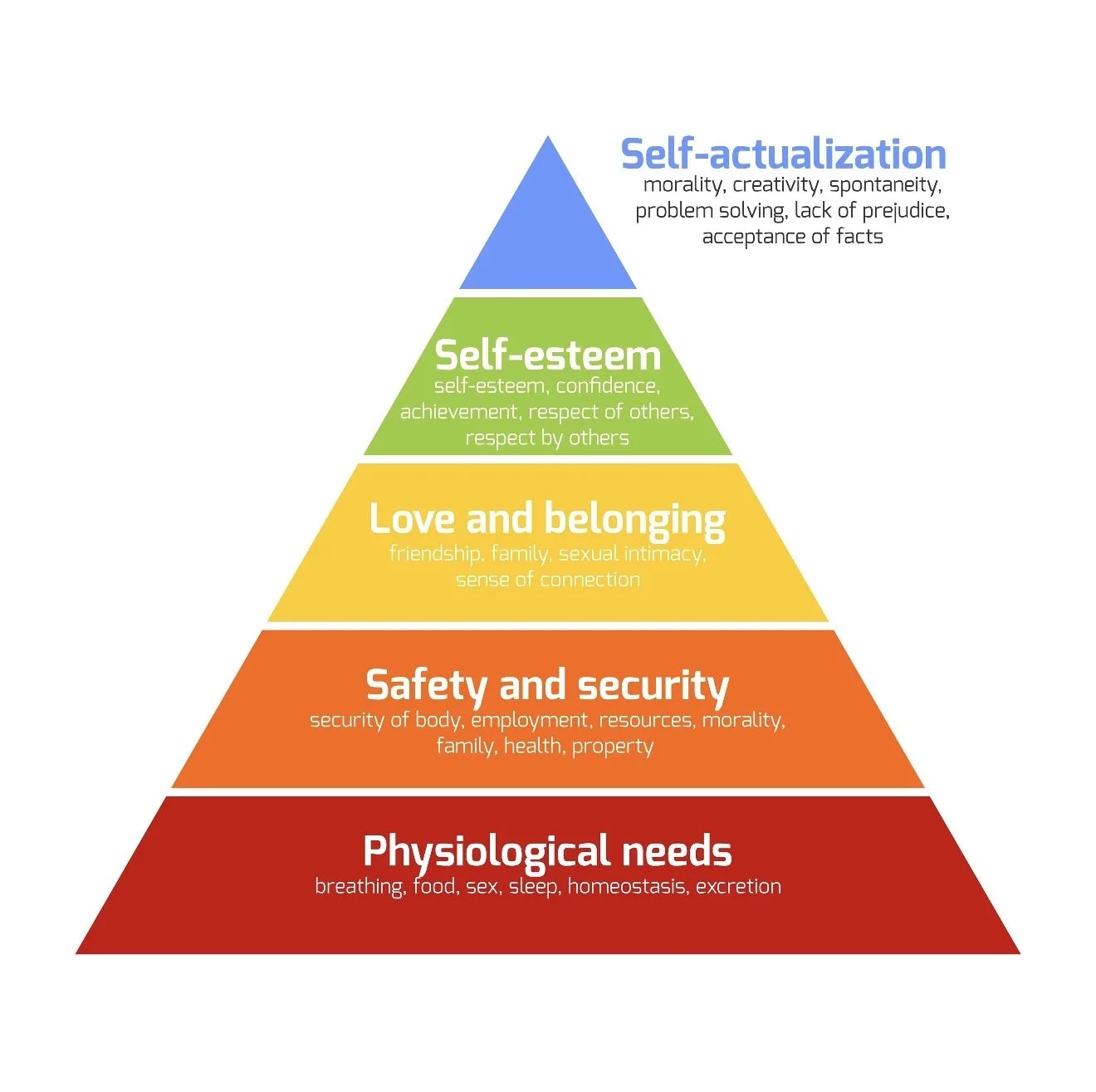
Abraham Maslow’s Hierarchy of Needs from his work “A Theory of Human Motivation” published 1943.
The Positive Impact of the "Hard Reset"
It feels impossible to find a "positive" in the loss of a mother, a father, or the roof over your head. In the immediate aftermath, there is none. But as time passes, the total absence of a safety net can lead to an extraordinary transformation:
The Birth of Radical Self-Reliance
When there is no one left to call and no home to retreat to, the internal "hero" is forced to wake up. You realize that your survival depends entirely on your own agency. This creates a level of grit and competence that cannot be taught in a classroom. You become your own sanctuary.
Empathy as a Superpower
Those who have known true hunger or the silence of a house without family develop a "frequency" for the suffering of others. You move through the world with a heightened sensitivity to the invisible struggles of people around you. This often leads to a life of service or a career meant to ensure others don't feel the same cold you did.
Rebuilding on Bedrock
Significant loss strips away the "ego" and the expectations of others. Without a family legacy to uphold or a status quo to maintain, you are finally free to ask: "Who am I when I have nothing?" The person who emerges from this question is often more authentic than the one who existed when life was easy.
The Practice of Gratitude in the Void
How do you find gratitude when the cupboard is bare and the phone is silent? It requires a shift from Comparative Gratitude (being happy because you have more than someone else) to Existential Gratitude.
• The Miracle of the Breath: When all else is gone, the simple fact that your lungs still draw air is a victory.
• The Kindness of Strangers: In the absence of biological family, the "chosen family" or the small kindness of a neighbor becomes a monumental gift.
• The Resilience of the Spirit: You can find gratitude for your own mind—the fact that despite everything taken from you, your capacity to think, to hope, and to endure remains intact.
Coming Into the Person You Were Meant to Be
The loss of family and security is a "shattering" event. But as the Japanese art of Kintsugi teaches us, a broken bowl repaired with gold is more beautiful and valuable than one that was never broken.
The person you were "meant to be" may have been someone who needed to understand the true value of a home so they could build one for others. You may have been meant to understand the fragility of life so you could live it with a ferocity that others can only imagine.
Moving Forward
If you are standing in the wreckage of your old life, know this: your value is not tied to your bank account or your lineage. You are the architect now. The structure you build from here will be made of different materials—tempered by loss, but held together by a strength that is entirely your own.