
Parenting, Divorce, High conflict parenting Shanda Kaus Parenting, Divorce, High conflict parenting Shanda Kaus

# The Grief of Being Interpreted

To be filtered through the lens of past mistakes, is a difficult place to find myself. Especially when it comes to my children. I feel like I am stuck in a moment that I want to move on from more than anything. But no matter what I do, I am kept there against my will.
There is a unique kind of grief that comes from being unable to explain yourself without sounding defensive.

A grief that settles quietly into the body when the people you love most no longer experience you directly, but instead through memory, perception, emotional retellings, fractured moments, or the worst chapters of your life.

Parental estrangement is often spoken about in absolutes. One parent is framed as good, the other as bad. One safe, the other unsafe. One stable, the other destructive.

But real families are rarely built from such simple materials.

Human relationships are complicated ecosystems of perception, pain, coping mechanisms, emotional injury, loyalty conflicts, misunderstandings, reactions, and survival strategies. Often, there is no singular moment that destroys a family, but rather years of emotional erosion quietly shaping the way people begin to interpret one another.

And perception — whether accurate, incomplete, exaggerated, or entirely justified — eventually becomes reality inside the minds of those living it.

That is perhaps one of the most painful truths about estrangement:

love itself does not guarantee access.

A parent can deeply love their child and still become someone the child no longer feels emotionally safe, comfortable, or willing to engage with. Likewise, a parent can make mistakes, struggle through addiction, emotional instability, grief, trauma, or unhealthy relationships and still carry genuine love for their children that never once disappeared beneath those struggles.

Both things can exist simultaneously.

That complexity is uncomfortable for people because it resists the simplicity of blame.

When families fracture, narratives naturally form. Human beings create stories in order to emotionally survive difficult experiences. We shape meaning around pain because uncertainty is unbearable to the nervous system. Over time, those stories become reinforced through repetition, emotional alliances, protective instincts, selective memories, and the understandable human need to identify who was responsible for the suffering.

And once those narratives solidify, every interaction becomes filtered through them.

A message sent out of longing may be interpreted as pressure.

An attempt to reconnect may be experienced as intrusion.

Silence may feel protective to one person and psychologically devastating to another.

To the parent reaching out, repeated contact can feel like devotion:

“I just want my children to know I never stopped loving them.”

To the person receiving it, especially after conflict or emotional instability, those same messages may feel overwhelming, emotionally loaded, or difficult to carry.

Neither experience necessarily cancels out the other.

That is the tragedy of estrangement.

There are no clean emotional lines.

Only human beings trying to survive the meanings they have assigned to one another.

I think one of the hardest parts for estranged parents is the experience of becoming interpreted almost entirely through previous mistakes. Human beings are not static creatures, yet families often freeze one another in time. The worst moments become identities. The unstable years become permanent character assessments. The reactions born from grief become evidence of inherent danger rather than symptoms of profound emotional suffering.

This does not mean accountability should disappear.

There are parents who must face the reality that their choices deeply affected the emotional safety of their children. Addiction, emotional volatility, unhealthy relationships, manipulation, inconsistency, rage, dishonesty, avoidance, or instability can leave lasting psychological impacts on a family system. Acknowledging that truth matters.

But accountability and grief are not mutually exclusive.

A parent can sincerely say:

“I was not always emotionally healthy.”

while also saying:

“Losing my children has nearly destroyed me.”

Both statements can be true at the same time.

Unfortunately, once estrangement occurs, attempts to repair the relationship can unintentionally worsen the divide. The more desperate the grief becomes, the more emotional the communication often becomes. The more emotional the communication becomes, the more it may reinforce existing narratives surrounding instability, pressure, or emotional unsafety.

It becomes a devastating cycle.

The parent feels abandoned and reaches harder.

The child or opposing parent feels overwhelmed and pulls further away.

The increased distance intensifies the grief.

The intensified grief increases the emotional urgency.

And eventually, love itself becomes misinterpreted through the lens of fear, exhaustion, resentment, or self-protection.

I no longer believe most fractured families are composed entirely of heroes and villains.

I believe many are composed of wounded people attempting to survive emotionally unbearable situations while carrying different memories of the same events.

I believe perception shapes reality far more than people realize.

I believe emotional pain changes the way we remember one another.

I believe unresolved hurt hardens into identity if left untouched long enough.

And I believe children caught between fractured adults often absorb emotional climates they were never meant to carry.

But I also believe human beings are capable of growth.

I believe people can become profoundly different from who they once were.

I believe accountability matters.

I believe healing matters.

I believe stability matters.

I believe time reveals patterns more honestly than arguments ever will.

And perhaps most importantly, I believe love is not always loud.

Sometimes love becomes quieter over time.

Less explaining.

Less defending.

Less chasing.

Less forcing.

Not because the love disappeared, but because eventually the deepest form of love becomes respecting the emotional autonomy of the people you miss while remaining emotionally available should they ever choose to return.

There is no victory in family estrangement.

Only grief.

Only distance.

Only unanswered questions carried silently through birthdays, holidays, ordinary Tuesdays, and years that pass far faster than anyone expected.

And yet somewhere inside that grief, I still believe something deeply human remains:

the hope that one day, beyond the narratives, beyond the interpretations, beyond the pain and fractured memories, people may finally see one another not as the worst thing they ever did, but as whole human beings who were struggling to find their way through suffering the best they knew how.

Read More
Shanda Kaus Shanda Kaus

The Quiet After Survival Mode

This is where I am at now.

It is not entirely uncomfortable, but it is not comfortable either.

I often cringe when I look back at certain periods of my life, so I have learned not to stay there for too long. Reflection is necessary, but living in shame is not growth.

I have not yet shared many of my personal experiences explicitly because I find myself existing in a strange kind of emotional exile — alienated not only from my daughters, but from the version of life I once believed I would always have.

Every decision I make now feels filtered through the judgment of people who have accepted a narrative of me as emotionally unsafe, unstable, or harmful.

That is a difficult thing to carry.

Not because I believe I was perfect — I was not — but because human beings are rarely reduced down to the worst moments they survived without losing critical pieces of the truth along the way.
There comes a point in some people’s lives where they stop fighting to control the narrative.

Not because they have nothing left to say —

but because they finally understand that no explanation on earth can force another human being to see them clearly.

I think I have arrived there.

For years, I tried to explain myself.

I tried to defend my intentions, clarify my heart, justify my mistakes, soften my reactions, and untangle the complicated web of experiences that shaped me into who I became during some of the hardest years of my life.

But human beings are not court cases.

We are not evidence folders neatly organized into categories of right and wrong.

We are wounded, emotional, adaptive creatures trying to survive what hurts us while simultaneously hurting others in ways we may not fully understand until much later.

There are versions of me that existed in survival mode that I barely recognize now.

Versions of me that were afraid.

Versions of me that stayed in places I should have left.

Versions of me that tolerated things that slowly eroded my self-worth.

Versions of me that reacted emotionally instead of wisely.

Versions of me that were drowning quietly while still trying to appear functional to the outside world.

And yet —

there were also parts of me that never disappeared.

The part of me that loves deeply.

The part of me that still believes kindness matters.

The part of me that believes fairness, honesty, accountability, forgiveness, and compassion are not weaknesses, but necessary conditions for a meaningful life.

Those parts survived everything.

The truth is, I have lost a great deal.

I lost relationships.

I lost years.

I lost pieces of my identity.

I lost time with my daughters that I can never get back.

I lost the version of life I once believed I was building.

Some losses happened because of my own decisions.

Some happened because of addiction, trauma, emotional exhaustion, and unhealthy dynamics I did not yet have the tools to navigate properly.

Some happened because people saw me through lenses I could no longer change.

And some losses simply became too large for love alone to repair.

That is one of the hardest truths I have ever had to accept.

People often speak about healing as though it is beautiful.

As though growth is graceful and inspirational.

But healing is often humiliating.

It is sitting alone with the awareness that your actions, your pain, your coping mechanisms, your relationships, and your choices all carried consequences that rippled outward into the lives of people you loved.

It is grieving while remaining accountable.

It is changing without applause.

It is becoming self-aware long after the damage has already been done.

That kind of transformation is quiet.

And despite all of it —

despite the grief, the misunderstandings, the endings, the loneliness, the rebuilding, the silence, and the years that feel stolen from me —

I am still here.

Still trying.

Still growing.

Still choosing sobriety.

Still choosing honesty.

Still choosing to become softer instead of harder.

Still choosing to believe that human beings can evolve.

This section of my writing is not intended to convince anyone that I was entirely right, innocent, or misunderstood.

It is simply my truth as I experienced it.

A collection of memories, perceptions, reflections, regrets, realizations, and emotional realities from my own lived experience.

Nothing more.

Nothing less.

I no longer need to scream to be understood..

I only need to speak honestly.

Read More
Shanda Kaus Shanda Kaus

Personal Disclaimer — All My Truth

Personal Disclaimer

Everything written and shared within this section reflects my own personal experiences, memories, emotions, perceptions, and interpretations of events as I understood and lived through them at the time.

Human experience is inherently subjective. Memory, emotion, trauma, perspective, and personal understanding all influence the way individuals interpret the world around them. I cannot speak for the thoughts, intentions, feelings, perceptions, or experiences of anyone else referenced within these writings, nor do I claim my perspective to represent the absolute or complete truth of any situation.

As human beings, we naturally create narratives about ourselves, others, and the experiences we endure. Often, these narratives are formed as coping mechanisms — ways of emotionally processing pain, confusion, grief, fear, disappointment, loss, or survival. The stories we carry are shaped by perception, lived experience, memory, and emotion, all of which are deeply human and inherently imperfect.

These writings are not intended to assign blame, villainize others, portray myself as innocent in every circumstance, or suggest that I alone experienced suffering. I fully acknowledge that I have made mistakes, caused hurt, misunderstood situations, reacted imperfectly, and contributed to outcomes throughout my life, as all human beings do.

There are often many sides to a story — one person’s perspective, another person’s perspective, and a broader truth that exists somewhere between perception, memory, emotion, and reality.

This space exists for personal expression, reflection, healing, accountability, growth, and honest storytelling through my own lens only. Readers are encouraged to understand that perception is never universal, and that every individual carries their own understanding of events shaped by their unique experiences, emotions, and internal world.

Read More
Shanda Kaus Shanda Kaus

# What I Stand For

If there is one thing life has taught me, it is this:

Kindness is not weakness.

Forgiveness is not foolishness.

And choosing to do the right thing — especially when it is difficult — is one of the greatest measures of a human being.

I do not believe we are here to dominate one another, shame one another, manipulate one another, or live behind masks so heavy that we forget who we truly are underneath them. I believe we are here to learn. To love. To connect. To evolve. To leave people softer than we found them.

The older I become, the less impressed I am by status, appearance, money, image, popularity, or performance. None of those things mean anything to me if a person lacks integrity, compassion, fairness, honesty, or the ability to self-reflect.

Character is everything.

I believe kindness is the only sustainable way to live. Not surface-level politeness. Not performative goodness. Real kindness. The kind that requires accountability. The kind that tells the truth gently. The kind that chooses understanding before condemnation. The kind that remembers every human being is carrying pain you cannot see.

I believe fairness and equality matter deeply because I know what it feels like to hurt. I know what it feels like to be misunderstood, rejected, judged, silenced, and abandoned. Those experiences did not make me want revenge; they made me want to become safer for others.

That is the difference.

Pain can harden a person or deepen them.

I have spent much of my life trying not to become bitter from the things that broke me. Some days I succeeded beautifully. Other days I failed completely. But even in my worst moments, I never stopped believing that goodness matters.

I believe forgiveness is essential for survival. Not because harmful behaviour should be excused, and not because boundaries should disappear, but because carrying hatred inside the body poisons the spirit holding it. Forgiveness is not always reconciliation. Sometimes forgiveness simply means refusing to let pain turn you cruel.

I believe people deserve grace while they are learning, growing, and healing. I believe most people are not evil — they are wounded, disconnected, afraid, conditioned, grieving, or emotionally unequipped. Understanding this changed my life.

And above all else, I believe being true to yourself is one of the most important things a person can do.

Not the polished version.

Not the socially acceptable version.

Not the version created to gain approval.

The real version.

The world pressures people to betray themselves constantly. To stay quiet when something feels wrong. To shrink themselves to be accepted. To abandon their values for comfort, image, power, validation, or belonging.

But there is no peace in self-betrayal.

True freedom begins the moment a person becomes honest with themselves about who they are, what they believe, what they feel, what they fear, and what they can no longer tolerate pretending not to know.

That kind of honesty changes everything.

I am not perfect. Far from it. I have made mistakes, reacted emotionally, trusted the wrong people, ignored my intuition, stayed too long, loved too deeply, and lost parts of myself trying to save others.

But I stand firmly in this:

I will always choose kindness over cruelty.

Understanding over judgment.

Truth over illusion.

Depth over superficiality.

Connection over ego.

And authenticity over performance.

Even when it costs me.

Especially when it costs me.

Because at the end of this life, I do not believe people will remember us for how impressive we were.

I believe they will remember how safe we made them feel, how deeply we loved, how honestly we lived, and whether or not our presence brought light into the lives around us.

That is the life I want to live.

Read More
Shanda Kaus Shanda Kaus

Tearing Down The Ironclad Wall Within, Taking off The Impenetrable Armour & Opening Up My Heart To You- All of My Truth—

After a lifetime spent hiding behind emotional armour, I am choosing to speak openly about the grief, trauma, heartbreak, and experiences that shaped me. This space is not about pity, attention, or validation — it is about truth. The raw, uncomfortable, human truth. Through faith, loss, abandonment, and survival, I have learned that silence may protect the heart, but it also isolates it. For the first time, I am laying down the walls I built to survive and opening my heart fully, honestly, and without disguise.
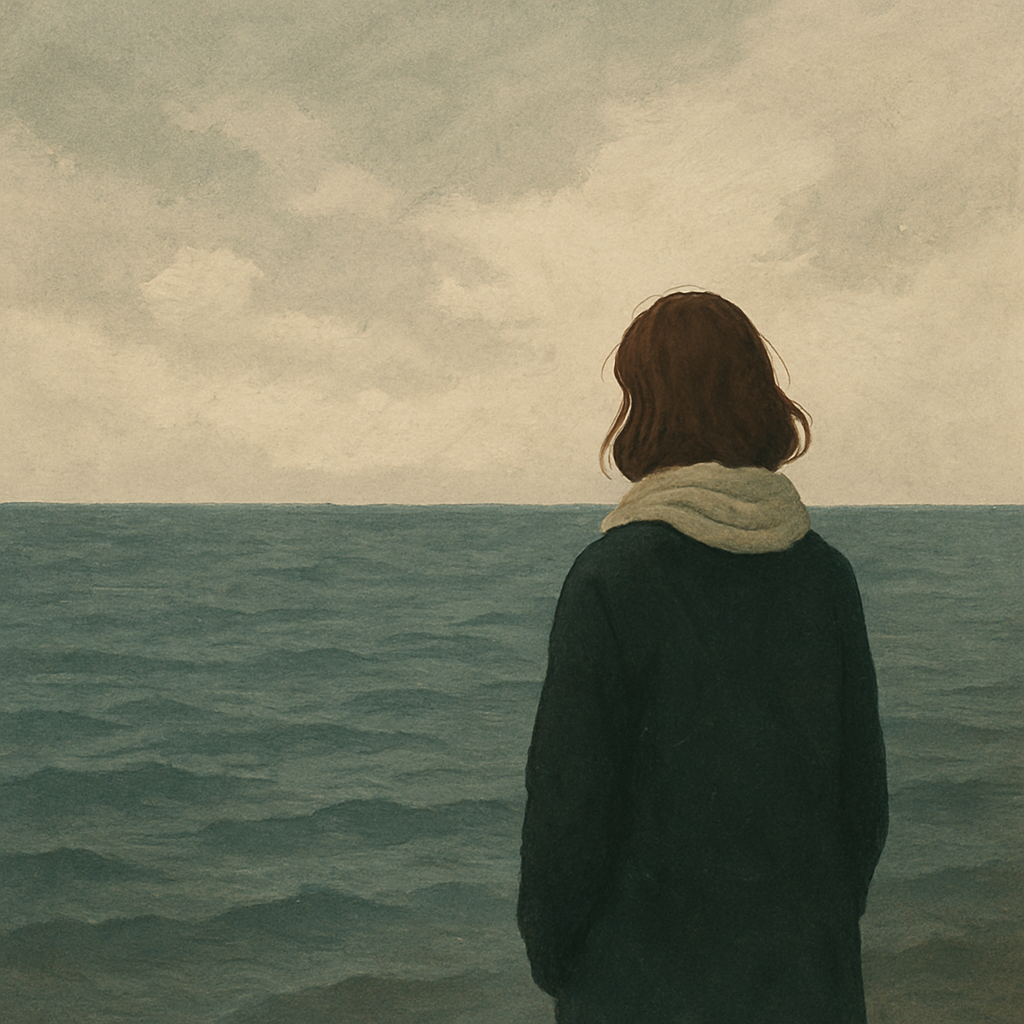
For most of my life, I have protected myself by saying less, sharing less, and keeping the deepest parts of me hidden behind walls no one could reach. I convinced myself that silence was safety. That if no one truly knew me, then no one could wound me deeply enough to break me.

But the truth is, the ironclad wall around my heart has become its own prison.

In this space, I will share the parts of my story I once buried to survive. The grief, trauma, heartbreak, fear, abandonment, shame, and experiences that shaped the woman I became. Not for pity. Not for validation. Not for attention. But because I am tired of carrying the weight of silence alone.

My greatest desire in this life has always been simple: real human connection. Honest. Loyal. Loving. The kind that does not disappear when things become difficult. The kind that does not punish vulnerability with rejection, judgment, silence, or abandonment.

Despite everything I have endured, I still believe connection is possible.

God has never abandoned me. Through every dark place I have walked, His presence has remained steady when people did not. My faith has become the one place where my soul feels fully safe. It is not God I fear trusting — it is people.

And yet, here I am.

For the first time in my life, I am choosing to lay down the armour that kept me emotionally hidden for decades. I do not know who will read these words. Maybe no one. Maybe thousands. Either way, this space was never created for popularity, approval, followers, or applause. It was created so I could finally speak the truth out loud instead of dying quietly beneath it.

Some of what I share here will be heavy. Some of it disturbing. Some of it painfully raw. Reader discretion is advised.

But I make this oath before God and before you, the reader:

I will tell the truth.

The whole truth.

And nothing but the truth.

This is my story.

Read More