

Old School Work Ethic vs. Modern Work Culture
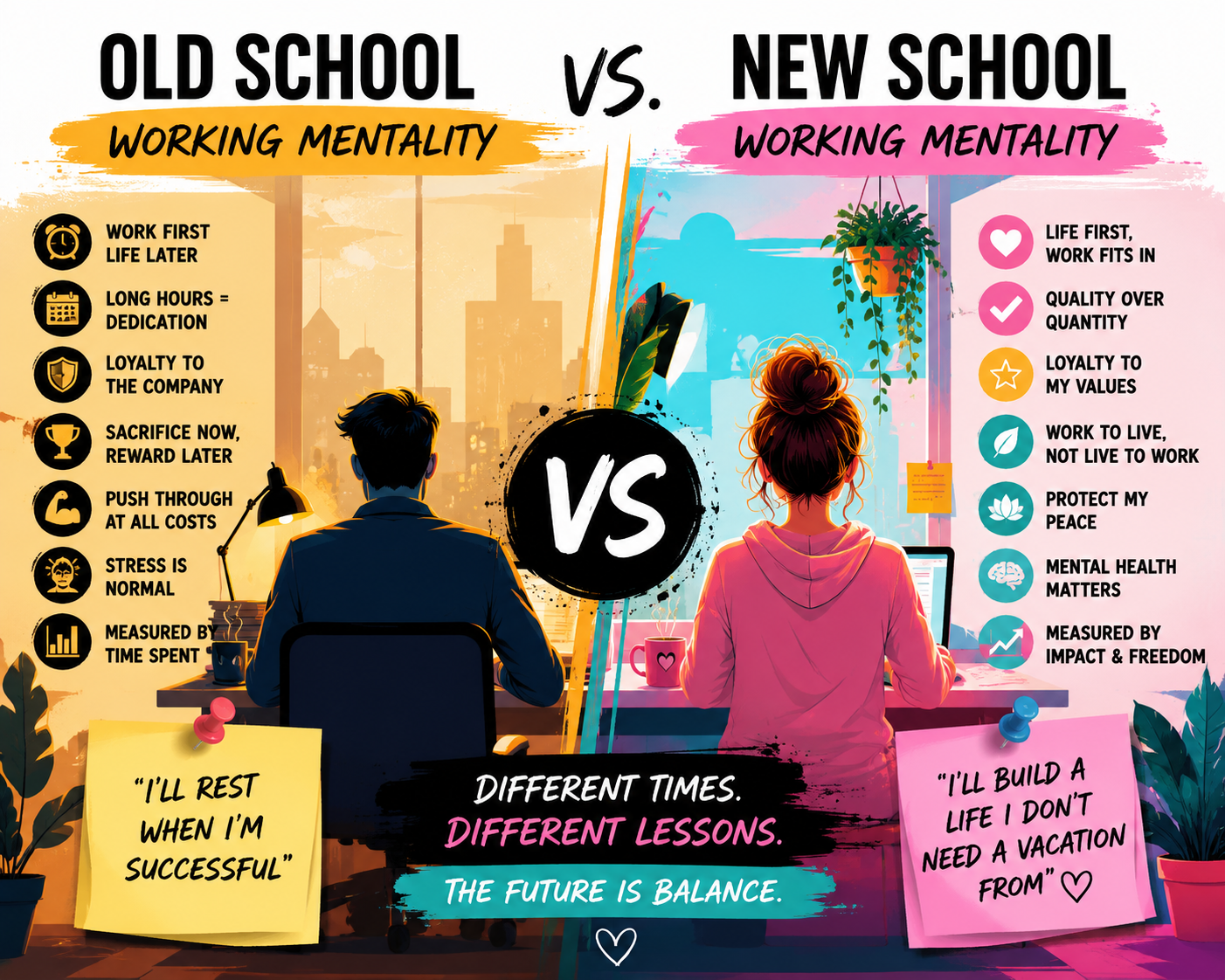
There was once a generation that measured character by endurance.
You showed up early.
You stayed late.
You worked through illness, heartbreak, exhaustion, grief, and stress because responsibility came first. You did not complain. You kept moving.
And truthfully, many families survived because of people like this.
I grew up watching that mentality closely. Hard work was not just respected — it was expected. You pushed through. You carried your weight. You stayed loyal even when things became difficult. There was pride in sacrifice. Pride in being dependable. Pride in surviving difficult things quietly.
And I still deeply respect that.
There is something admirable about people who continue showing up despite life trying to crush them repeatedly. Especially now, in a world where commitment itself sometimes feels disposable.
But I also think many people from that generation quietly broke themselves trying to prove they were strong.
They worked until stress became personality.
Until exhaustion became normal.
Until emotional disconnection became survival.
Until burnout was worn almost like a badge of honour.
And now we are watching a newer generation push back against that mentality entirely.
Younger generations speak openly about boundaries, mental health, emotional safety, nervous system regulation, burnout, flexibility, work-life balance, and protecting their peace. They are less willing to tolerate toxic workplaces, unhealthy power dynamics, or the belief that suffering automatically equals virtue.
Older generations often see this as weakness.
Younger generations often see the old mentality as self-destruction.
And honestly?
I think both sides misunderstand each other more than they realize.
The older generation grew up during a time where survival felt less guaranteed. Stability mattered. Loyalty mattered. You kept the job because the job kept the lights on. Work was directly connected to identity, morality, and self-worth.
Many people did not have the luxury of “finding themselves.” They were too busy trying to survive, provide, and keep everything from collapsing.
But younger generations grew up watching something else entirely.
They watched parents burn themselves into the ground for companies that replaced them in two weeks. They watched stress destroy marriages, health, relationships, and peace of mind. They watched people dedicate decades to employers who viewed them as replaceable numbers on spreadsheets.
And so naturally many younger people began asking:
“What exactly are we sacrificing ourselves for?”
That question is not laziness.
It is disillusionment.
At the same time, I do think some modern work culture has overcorrected.
Not every uncomfortable experience is toxicity.
Not every difficult boss is abuse.
Not every challenge is trauma.
Not every moment of stress means you are in the wrong place.
Human beings still need discipline.
They still need resilience.
They still need purpose.
They still need the ability to tolerate discomfort long enough to build something meaningful.
There is a difference between protecting your peace and avoiding responsibility altogether.
And maybe that is where the tension truly exists.
The older generation often feared instability.
The younger generation often fears losing themselves.
Both fears are understandable.
As someone who has worked in healthcare, I have seen both mentalities up close. I have worked beside people who would continue giving every ounce of themselves long after they had nothing left to give. People who never sat down, never slowed down, never complained, never asked for help. Some of the strongest people I have ever met.
But I have also seen what chronic stress does to the human body and mind.
I have seen exhaustion reshape personalities.
I have seen emotional numbness become normalized.
I have seen people forget who they are outside of productivity and obligation.
And I think many people are finally beginning to ask a very important question:
What is the point of building a life you are too exhausted to actually live?
The answer likely does not exist at either extreme.
Not in glorified burnout.
And not in avoiding every difficult thing.
Perhaps the healthiest future lies somewhere in the middle.
To work hard without worshipping exhaustion.
To value discipline without sacrificing humanity.
To rest without abandoning responsibility.
To build meaningful lives without destroying ourselves in the process.
Because human beings were never meant to function like machines.
And maybe true success is not measured only by how much we can endure…
…but also by whether we learned how to live peacefully while enduring it.