The Strange, Uncomfortable Work of Allowing Myself to Be Happy
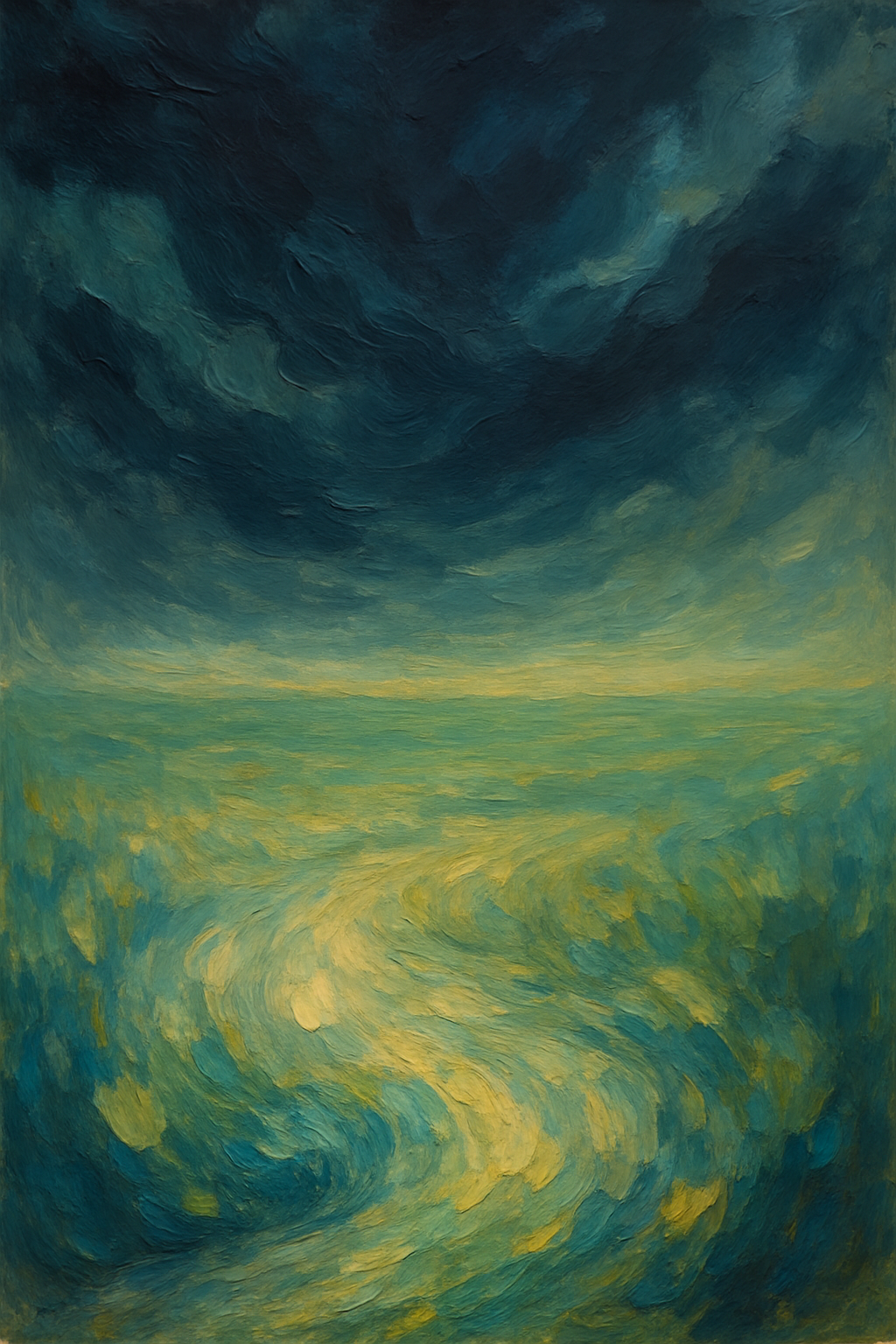
Digital print by S. Kaus RN BScN
There’s a kind of exhaustion that doesn’t come from overworking your body — it comes from overworking your heart.
For years I’ve been trying to be so responsible, so present, so vigilant… because deep down I’ve carried this belief:
If I ease up, if I allow myself even a breath of joy or rest, my girls get further away.
It’s irrational, I know.
But grief and responsibility have a way of wiring your nervous system like a smoke alarm — always on edge, always listening for danger.
And joy?
Joy feels like taking the batteries out.
Why Happiness Feels Like a Risk
I don’t think people talk enough about how uncomfortable happiness can be after you’ve lived in survival mode.
Relaxing isn’t relaxing — it feels wrong, unsafe, even disloyal.
If I lie down on the bed and watch TV, my skin almost crawls.
My mind whispers:
You should be doing something.
You should be fixing something.
You should be proving something.
You should be finding a way back to them.
Because the truth is:
There is a gaping hole inside me where my daughters belong.
A space I carry everywhere I go — in my chest, in the back of my throat, in the quiet moments I try desperately to fill with distractions.
I miss them with a kind of ache that doesn’t dull with time.
If anything, it sharpens.
And when the longing is this big, happiness feels almost… inappropriate.
Like I haven’t earned it.
Like it might erase them somehow.
Like being “fine” means I don’t love them enough.
The Lie We Tell Ourselves About Responsibility is a tricky thing…
It’s noble, yes.
But it can also become a prison when you use it to punish yourself.
I’ve spent so long trying to hold everything together — emotionally, financially, spiritually, morally — that I forgot to ask myself a simple question:
What am I allowed to feel?
I’ve gotten good at surviving.
I’ve gotten good at functioning.
Processing.
Performing.
Doing.
Working.
But allowing myself to be human?
Allowing softness?
Allowing joy without guilt?
That’s still a foreign language.
The Unbearable Stillness
The hardest part of slowing down is the stillness.
Because in stillness, the truth rushes in:
My daughters.
Their absence.
The memories.
The fear that I will always feel this disconnected from the people I love most.
At night when I lie down, my mind becomes a highway with no speed limit — thoughts racing, looping, pounding.
Where are they now?
Do they think of me?
Would they recognize how much I’ve grown?
Will they ever come back to me?
Rest doesn’t feel like rest when your heart hasn’t had any in years.
When Love Has No Room Left: How This Grief Affects My Relationships
One of the hardest truths I’ve had to face — one I don’t often admit out loud — is how much this grief has shaped my relationships with everyone else in my life.
Because when your heart is stretched across miles toward your children,
there isn’t much bandwidth left for the living, breathing people beside you.
It’s not that I don’t care.
It’s not that I don’t appreciate the souls who’ve walked with me in the dark.
It’s not that I don’t see their kindness, their effort, their presence.
It’s that my emotional ecosystem feels permanently tilted toward one direction — toward the three people I feel most responsible for, most connected to, and most devastated to be without.
I’ve grown so much — painfully, intentionally, spiritually — and in that process, I’ve formed incredibly meaningful bonds with a few select people.
People who see me.
People who understand me without needing the full story.
People who remind me gently, lovingly, that I am still here… even when I forget.
But even with them — the ones who deserve the best of me — I have so little space to give.
It’s like grief has taken up residency in my chest and built an entire city where my capacity for connection used to be.
I can talk, I can laugh, I can show up in moments… but I can’t fully tend to relationships the way I want to.
There’s a wall.
A preoccupation.
A gravitational pull that keeps dragging me back to the same aching thought:
My girls aren’t home yet.
And until they are, I feel like I’m living in emotional quarantine — close to others, connected even, but separated by this invisible barrier no one can fix for me.
Even the people who truly get me, the ones who never pressure me, the ones who love me as I am —
I still find myself withholding pieces of my heart because it feels wrong to give them away while the three people who should have them the most are still out of reach.
It’s an impossible balance:
wanting to love the good people in my life,
wanting to be present for them,
wanting to grow connections that are healthy and reciprocal…
while knowing that my heart is already spoken for by a loss I didn’t choose.
I’m not empty — I’m occupied.
And until my daughters come home,
every relationship I have feels like I’m loving with my non-dominant hand — doing the best I can, offering sincerity but never the fullness of what I’m capable of.
Not because others aren’t worthy.
But because the space inside me is already filled with their names.
Learning How to Live Again (Even While I’m Hurting)
I’m starting to realize something:
Being unhappy won’t bring my girls back.
Punishing myself won’t make me a better mother.
Staying tense, hyper-responsible, over-functioning… none of that creates the bridge I ache for.
But healing might.
Hope might.
Allowing myself to breathe might.
Maybe joy isn’t disrespect to grief — maybe it’s the thing that gives grief somewhere soft to land.
Maybe learning to laugh again doesn’t mean forgetting them.
Maybe it means I’m preparing a life they can walk back into someday.
A life that is warm, and open, and still full of me… not just the pieces of me that survival has left behind.
A New Permission Slip
I’m learning to give myself permission to:
Sit down before I collapse.
Choose softness even when the world feels sharp.
Enjoy small moments without feeling like I’m abandoning the big ones.
Trust that my bond with my daughters exists beyond circumstance.
Let happiness and heartbreak coexist without canceling each other out.
It’s not easy.
It feels strange.
Unnatural.
Like wearing clothes that don’t quite fit yet.
But I’m trying.
Because I deserve to feel alive.
And someday, when my girls read this — I want them to see that even in the years we were apart, I was learning how to be whole again.
How to build a life where they would always have a place.
How to become the mother they deserve… and the woman I deserve to be.
Battling the Strongest Demon known to Mankind; Right in the Middle of the Storm
What still amazes me — and sometimes humbles me — is that all of this grief, all of this upheaval, all of this unraveling happened while I was getting sober.
Not after.
Not once life calmed down.
Not once I had support or stability or certainty.
Right in the middle of it.
While my daughters felt further and further out of reach.
While I was trying to rebuild my life from the inside out.
While I was questioning everything about who I was and who I wanted to be.
In the thick of all that heartbreak, I overcame one of the hardest addictions a person can face.
It wasn’t some clean, glamorous transformation.
It was gritty.
Messy.
Humbling.
It cracked me open in places I didn’t even know existed.
But something unexpected happened there — something I never saw coming.
I started to understand myself.
Not through the fog of coping mechanisms.
Not through numbing.
Not through survival mode.
Not through self-punishment.
But through presence.
Real, uncomfortable presence without my lethal security blanket.
Sobriety forced me to sit with the ache of missing my girls instead of running from it.
It made every emotion sharper, but also more honest.
I didn’t drown in my feelings — I finally heard them.
And underneath the chaos and grief, something steady began to rise in me;
My Intuition
My inner voice stopped being a whisper I could ignore and became a compass I couldn’t deny.
Sobriety didn’t make my life easier — it made me more aware.
More grounded.
More emotionally stable than I have ever been.
It taught me to pause instead of react.
To feel instead of flee.
To respond instead of explode.
To choose clarity over chaos.
And in a way I never expected, sobriety became the anchor I didn’t know I needed while everything else in my world was shifting.
Even now, with all the grief I still carry, I can look at myself — really look — and say:
I know who I am.
I know what I overcame.
And I know I did it without abandoning myself.
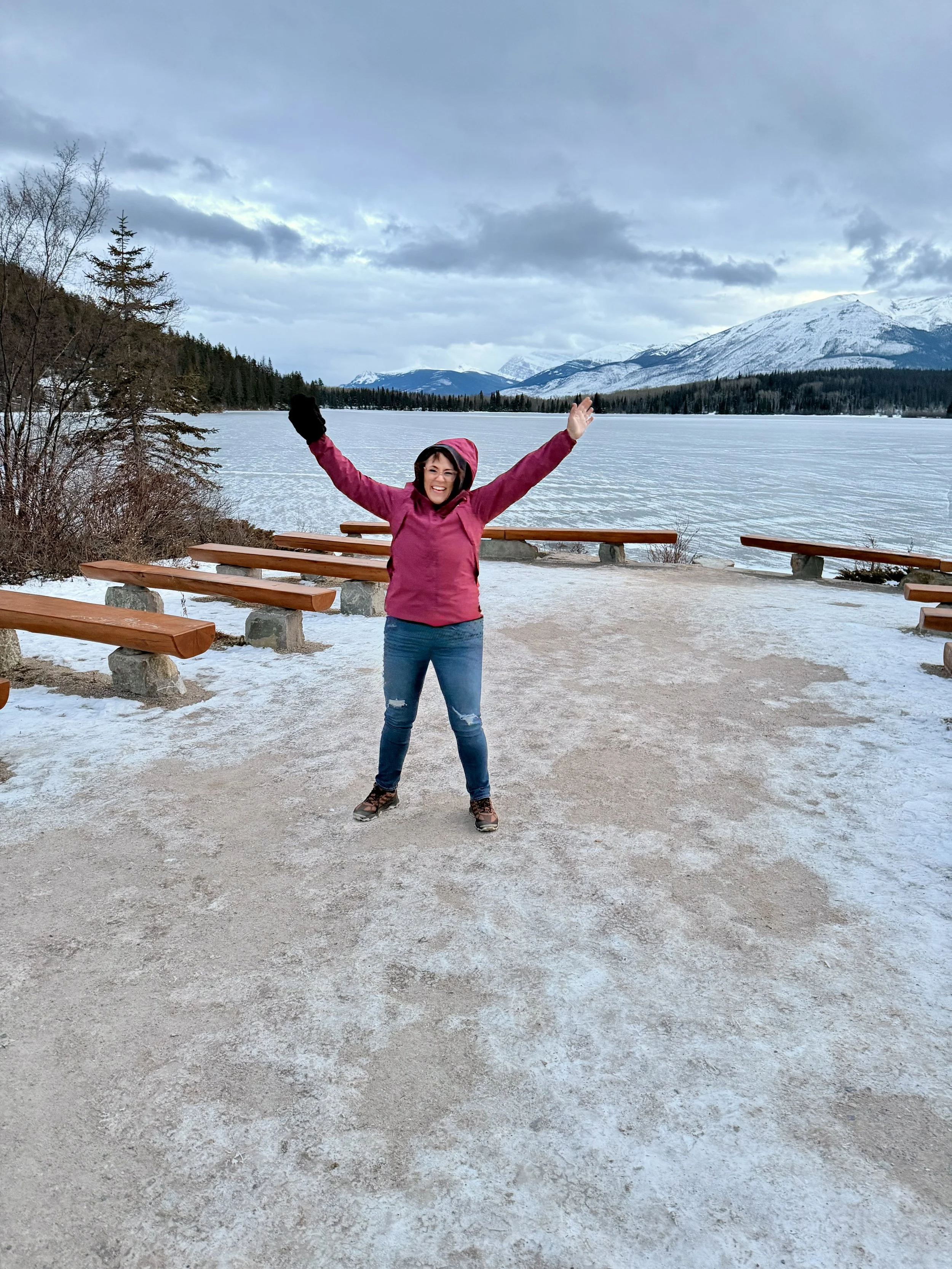
Just Being Me- One Mitten on and the other, well- only God knows…
Pyramid Lake Island, Alberta, Canada in December 2025